Introduction
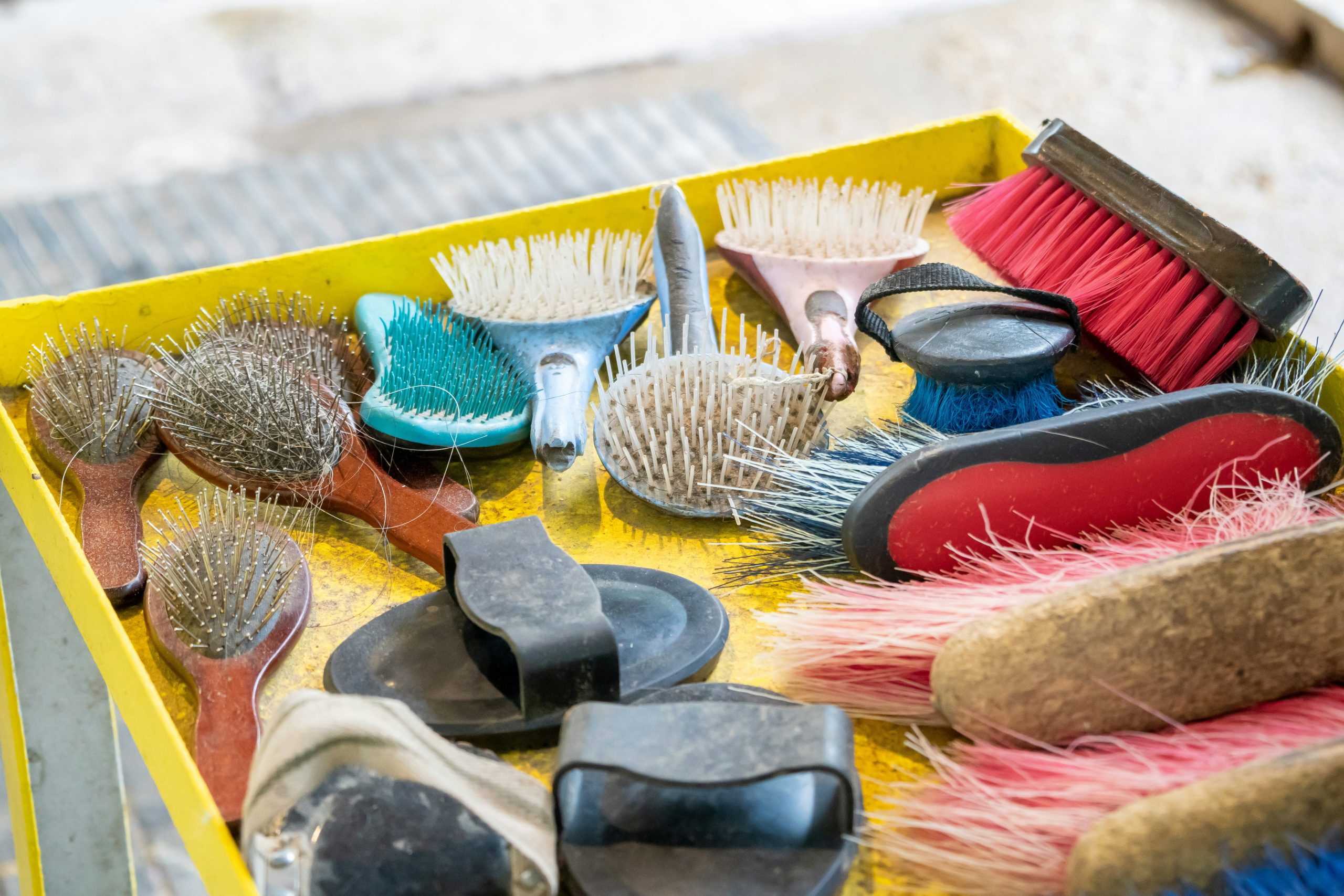
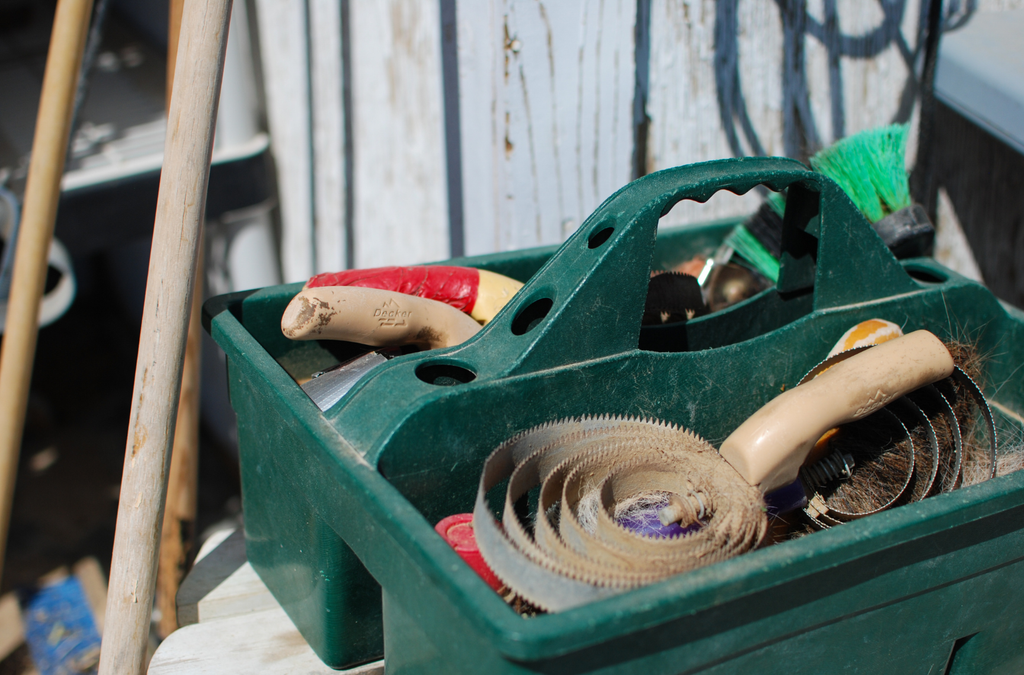
Take a quick look inside your grooming tote right now. When was the last time you actually washed the tools you use on your horse every single day?
It’s easy to let it slide, but caked-on mud, old sweat, skin flakes, and natural hair oils turn our favorite tools into a hidden breeding ground for bacteria.
When we don’t clean horse grooming brushes regularly, we aren’t actually cleaning our horses—we are just moving old bacteria and fungal spores right back across their skin.
Taking care of your tools isn’t just about keeping things neat; it is your horse’s first line of defense against painful skin conditions like rain rot, ringworm, and scratches.
The Secret Weapon: The Air Hose Blowout
Before you drop a heavily caked mud brush straight into water, you need to use a genius barn shortcut to save your muscles and your patience: the air hose.
Twice a year, when it is time to deep clean the entire grooming tote, I start by taking all my synthetic dandy brushes, hard plastic curry combs, and hoof picks over to the barn air compressor.
Using the air hose to power-blow the embedded dust, dander, and loose hair out of the deepest parts of the bristles makes a massive difference.
It instantly strips away the heavy debris so your cleaning water stays clean and active, instead of turning into a thick bucket of mud on step one.
The Antibacterial Soak and Detail Scrub
Once the heavy dust is blown away, it is time for a deep antibacterial bath to kill off hidden fungal spores.
Fill up a clean utility bucket with warm water and add a generous squirt of antibacterial dish soap.
Submerge your plastic tools and synthetic brushes entirely, and let them sit and soak for about half an hour. This half-hour soak loosens up the stubborn grease and sweat caked onto the base of the bristles.
After thirty minutes, pull the tools out one by one for the detailed work.
I use a small, stiff scrub brush and a grooming comb to physically work right down into the bristles and those hard-to-reach plastic corners where mud loves to hide.
A quick comb-through pulls out any stubborn hair strands that survived the air hose.
The Power Rinse and Sun Cure
To finish the job, take your scrubbed tools out to the wash rack. Use the spray nozzle on your garden hose to power-rinse away every last bit of dirty soap scum.
Once they are completely rinsed, lay them flat on a clean towel or a warm wooden bench out in the direct sunlight to air dry.
Direct sunlight acts as a natural sanitizer, ensuring your tools are perfectly fresh before they go back into your tote box.
The Right Tools for the Season
When it comes to the soap, you don’t need anything fancy or expensive. I just use a cheap off-brand dish soap, as long as it says antibacterial right on the front of the bottle.
It gets the grease out and kills the bugs just as well as the name brands.
Having the right brushes for the right season also makes tool care much easier.
In the spring, when that heavy winter coat is flying, I prefer using a classic metal curry comb because its sturdy teeth do an amazing job of catching and pulling out that long, thick hair.
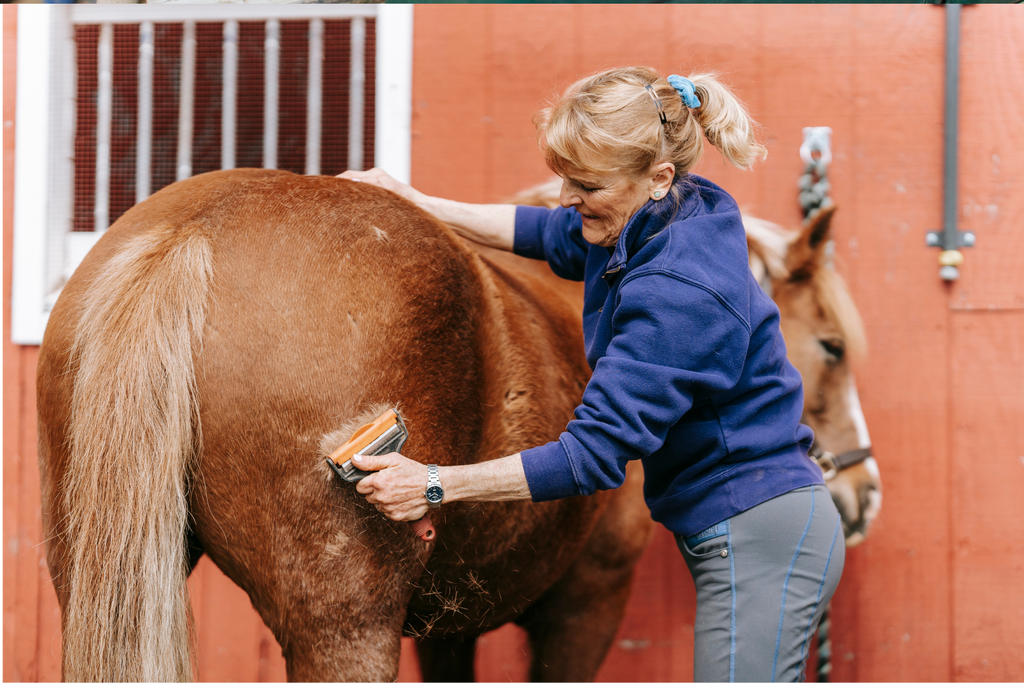
But once that winter coat is completely gone, I switch over to a small rubber massaging brush (curry comb).
It is much gentler on their sleek summer skin, brings out a beautiful shine, and is incredibly easy to blow clean with the air hose!
For those dry, dusty days in between deep cleanings, a long-bristle brush works beautifully for a quick surface dust-off before you saddle up.
Conclusion: A Clean Start for a Healthy Coat
Committing to this deep cleaning routine just twice a year will completely transform the health of your horse’s coat.
When your tools are clean, your grooming sessions actually do their job—bringing out those beautiful,
natural skin oils and creating a brilliant shine without spreading hidden pasture fungus.
Take an hour this weekend to blow out the dust, soak those bristles,
and give your horse the clean start they deserve. Your horse’s skin—and your grooming tote—will thank you!
Leave a Reply